Cross-border maritime operations require vessels to change routes frequently and sail through areas with very different legal requirements, weather conditions, and network coverage. Relying on only one transmission technology can increase the risk of losing communication during signal disruption and may also lead to unnecessary costs when the vessel is near shore or at port.
NetNam Maritime’s multi-layer Hybrid Connectivity solution combines high-speed LEO, stable GEO, and coastal 4G/5G networks. Connections can be switched and managed automatically based on bandwidth needs and service costs.
Start with the voyage and the operations that must stay connected
Before selecting a service, the first step is to identify where the vessel will operate, which ports it will call at, and which applications need to exchange data with shore. Operational email, voice calls, document synchronisation, and crew Internet access have different requirements for bandwidth, data volume, and usage time.
This information gives the technical team a basis for selecting the right connectivity for each part of the voyage. In addition to coverage, the team should review service-plan conditions, local service availability, and alternative connection options. The assessment should be updated whenever the route or operational requirements change.
Each connectivity layer should have a clear role
In a hybrid model, low Earth orbit (LEO) satellite services such as Starlink and OneWeb, geostationary orbit (GEO) services such as VSAT and Inmarsat, and 4G/5G can be selected for different requirements. Actual availability depends on the service, equipment, and local conditions in each area. 4G/5G should only be used where suitable network coverage and services are available. Talk to our expert!
.png?width=1499&height=1049&name=ChatGPT%20Image%2011_39_32%2021%20thg%209%2c%202026%20(2).png)
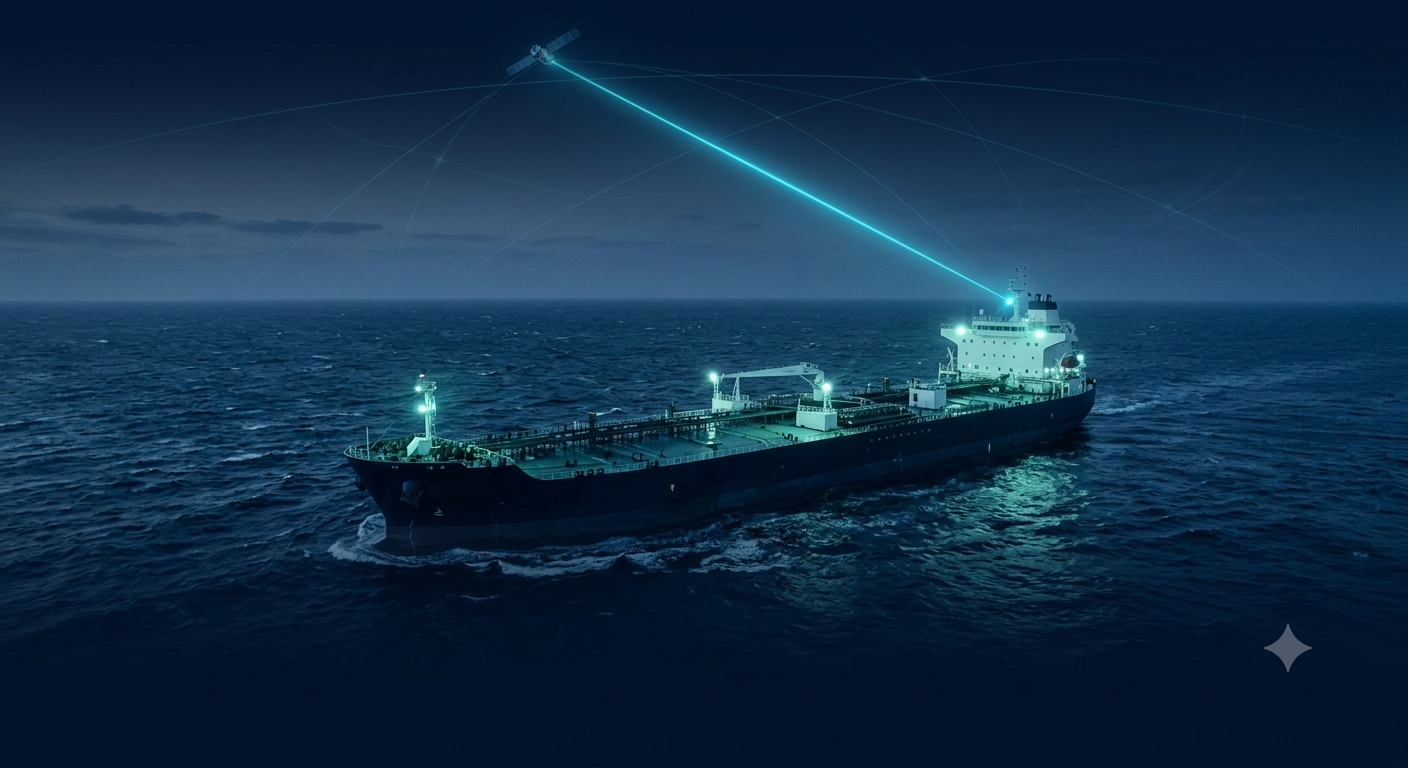
Instead of depending on a single connection, NetNam Maritime’s Hybrid Connectivity model uses a flexible multi-layer approach:
-
Automatic traffic routing (Dynamic Traffic Steering): When the vessel operates in international waters, the system can prioritise LEO connectivity for real-time applications and crew welfare services. GEO acts as a hot-standby link and can take over bridge-operation traffic within milliseconds if the LEO signal becomes weak.
-
Port and nearshore mode (Nearshore Optimization): When the vessel enters coastal shipping lanes or berths at a port, the smart router can automatically activate a high-capacity 4G/5G connection. High-data tasks, such as system backup, software updates, CCTV video transmission, and entertainment Internet access, can then be moved to the mobile network at a lower cost than satellite connectivity.
-
Continuous working sessions (Seamless Session Persistence): NetNam uses bonding technology and dedicated VPN connections to maintain application sessions when the vessel switches between satellite and mobile networks, helping reduce dropped operational calls and interruptions to management applications.
For example, a vessel may need to send an operational report while data synchronisation and personal Internet access are using the same connection. The management policy can prioritise business applications, reschedule large data transfers, and switch to an alternative connection according to predefined rules.
Using multiple connectivity sources also requires effective coordination. Switching to a backup link does not automatically keep every application session unchanged. For this reason, applications should be tested after failover, acceptable interruption levels should be defined, and users should know how to respond when an issue occurs. Talk to our expert!
NetNam combines solution design with managed operations
In the NetNam Maritime model, connectivity services are integrated with NetWave to manage the network, users, and usage policies. For ITC’s ORCA02 vessel, NetNam deployed a combined solution using VSAT, Starlink, and nearshore 4G/5G, together with IT services that support vessel operations.
.png?width=1659&height=948&name=ChatGPT%20Image%2011_39_32%2021%20thg%209%2c%202026%20(1).png)
This case shows how several components can work together within one system. However, each vessel still needs to be assessed based on its route, current infrastructure, and specific operational needs. Acceptance criteria should include application usability, backup arrangements, and support responsibilities after handover.
Businesses can start discussions with NetNam by sharing the expected voyage route and the list of applications that must remain available. Based on this information, both sides can review the existing connections, identify any gaps, and agree on a suitable coordination plan that matches the vessel’s operating schedule.
Explore NetNam Maritime services!
Hotline: 1900 1586
Email: support@netnam.vn
Website: https://netnam.com/netnam-maritime
NETNAM CORPORATION – 30 years of trusted internet & managed IT solutions and services for businesses
Headquater: 2nd Floor, HITC Building, 239 Xuan Thuy Street, Cau Giay Ward, Hanoi
Ho Chi Minh City Branch: 7 Nguyen Thi Minh Khai Street, Sai Gon Ward, Ho Chi Minh City
Representative Office: 2 Quang Trung Street, Hai Chau Ward, Da Nang
Đội tàu của bạn mất bao lâu để phát hiện một sự cố mất liên lạc? NetNam Maritime khảo sát hiện trạng và bàn giao đề xuất kịch bản kết nối trong 5 ngày làm việc.
Đặt lịch khảo sát