Tài nguyên / Hospitality
Tài nguyên / Hospitality
According to Mews 2026, the average hotel now works with approximately 8–10 different software providers, spanning property management, revenue management, room distribution, point-of-sale systems and guest-facing platforms. From a cybersecurity perspective, this means access is no longer limited to internal employee accounts. Software vendors, implementation partners, maintenance providers and technical support teams may all need access to specific systems to perform their roles. As more partners become involved in hotel operations, the number and variety of access permissions also increase. The objective is not simply to grant or restrict access. Each permission should have a clear business purpose, be limited to what is necessary for the task, and remain visible and reviewable for as long as access is required.
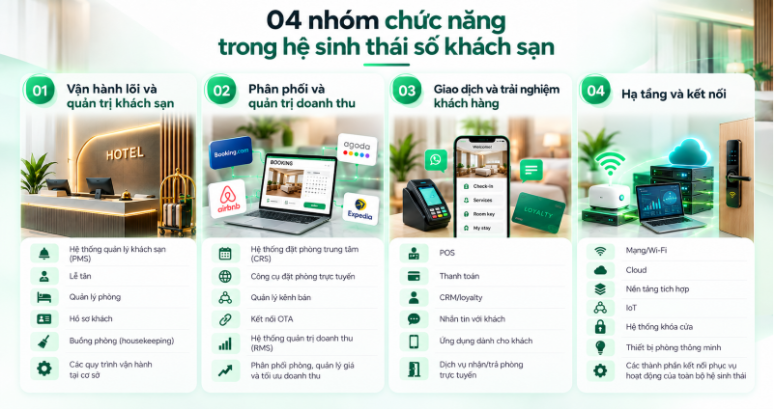
Hotel Digital Ecosystems Are Expanding Across More Systems and Partners
Modern hotel operations rely on multiple technology layers that serve different functions while remaining closely connected within the same digital ecosystem. Rather than relying on a single platform to manage every process, hotels typically use specialized systems for different operational areas. This gives businesses greater flexibility to select and integrate solutions that best fit their needs instead of building the entire technology stack internally.
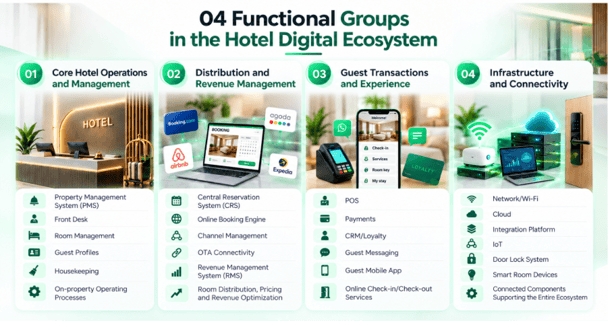
As more partners participate in the same operating environment, data and access permissions are distributed across more points in the ecosystem. One partner may require access for implementation, another for integration, and another for maintenance or technical support. These permissions may also change as the scope of work evolves, or the engagement moves from deployment into ongoing operations. Management gaps can emerge when existing access no longer reflects the actual business requirement. Privileges may have been expanded but not reviewed; accounts may remain active after the work has ended, or there may be insufficient information to trace activity when an investigation is required. Effective partner access management therefore needs to keep permissions aligned with the partner’s current role and scope of work throughout the access lifecycle.
A Risk-Based Approach to Partner Access
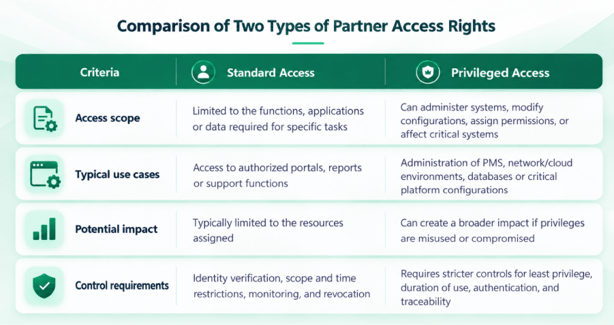
Partner access refers to the permissions a hotel grants to vendors or external service providers so they can deploy, operate, maintain or support a system. Because the scope of those permissions can vary significantly from one partner to another, the level of control should reflect both the access required for the role and the potential impact if that access is misused or compromised. A provider supporting a limited application function may need only restricted access, while another partner may require administrative privileges or access to sensitive systems and data. Classifying partner access by scope and business impact therefore gives hotels a clearer basis for applying controls that are proportionate to the level of risk involved.
For accounts with elevated privileges or access to sensitive systems and data, hotels can consider Privileged Access Management (PAM) as an additional layer of control. PAM helps organizations limit privileged access to what is necessary, keep that access available only for an appropriate period, and maintain sufficient activity records for later review. Within the hospitality sector, Wynn Resorts has applied privileged access controls to manage high-level accounts and support PCI DSS requirements across a complex operating environment.
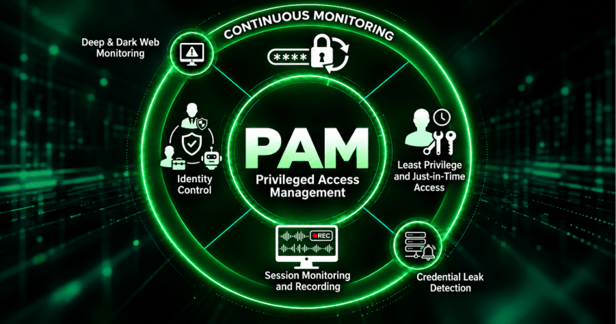
Partner access also needs to be managed for as long as the partner retains access to the hotel environment. Permissions should be reviewed regularly, validated against current responsibilities, and adjusted or revoked when requirements change. Supporting technologies can provide additional visibility into activity that falls outside expected patterns. For hotels operating continuously, this creates a natural connection between partner access management and 24/7 cybersecurity monitoring. Access management defines what a partner is permitted to do; continuous monitoring helps determine whether that access is being used in line with its intended purpose.
NetGuardX Maintains 24/7 Cybersecurity Monitoring
Access controls are most effective when hotels can also observe and validate how access is being used across the environment. NetGuardX supports this requirement through 24/7 cybersecurity monitoring, built around three interconnected pillars: People, Process and Technology.
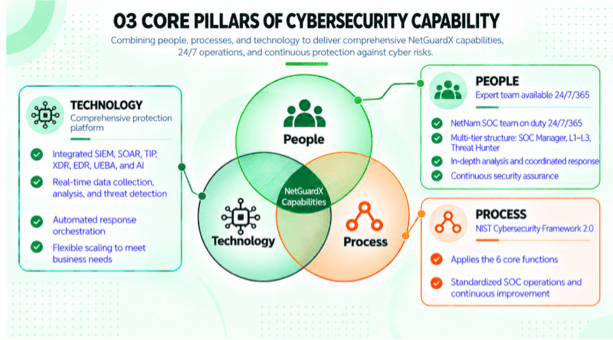
As hotel digital ecosystems continue to expand, cybersecurity management should not become a barrier to technology adoption or collaboration with external partners. The priority is to maintain a level of control that keeps pace with the increasing connectivity of the operating environment.
Building on more than 32 years of IT experience and practical technology deployment across the hospitality sector, NetNam continues to support hotels and premium resorts nationwide in strengthening their cybersecurity capabilities. Through NetGuardX, NetNam helps organizations maintain visibility, validate suspicious activity and coordinate response when required — supporting the protection of digital operations while helping hotels maintain a consistent guest experience.
Learn more about NetGuardX services!
Hotline: 1900 1586
Email: marketing@netnam.vn
Website: https://netnam.com/netguardx
NETNAM CORPORATION – 30 years of trusted internet & managed IT solutions and services for businesses
Head Office: 2nd Floor, HITC Building, 239 Xuan Thuy Street, Cau Giay Ward, Hanoi
Branch Office: 7 Nguyen Thi Minh Khai Street, Sai Gon Ward, Ho Chi Minh City
Representative Office: 2 Quang Trung Street, Hai Chau Ward, Da Nang
Reference:
https://www.mews.com/en/press/mews-operating-system-unfold-2026

Doanh nghiệp của bạn mất bao lâu để phát hiện một cuộc tấn công? NetGuardX đánh giá hiện trạng và bàn giao đề xuất lộ trình giám sát trong 5 ngày làm việc.
Đặt lịch đánh giá