
/Blog%20Post/ri_linkedin-fill-white.svg)
/Blog%20Post/prime_twitter-white.svg)

.png)
Businesses should select Single-Cloud for speed and cost optimization, or Multi-Cloud for flexibility and risk reduction, tailored to their strategic goals and powered by Containerization and IaC technologies.
Over the past decade, Cloud Computing has transitioned from a competitive advantage to a default operational standard. However, as the "cloud journey" reaches maturity, the question for CIOs and CTOs is no longer simply "Should we use the Cloud?" but has evolved into a more complex architectural puzzle: "Should we commit fully to a single partner (Single-Cloud) or distribute risk and leverage the strengths of multiple giants (Multi-Cloud)?".
According to the Flexera 2024 State of the Cloud Report, 89% of enterprises currently adopt a Multi-Cloud strategy. However, this figure does not mean Multi-Cloud is a "silver bullet" for every problem. Choosing the wrong model can lead to skyrocketing operational costs, security vulnerabilities, and management complexity.
This article provides a deep-dive analysis of both strategies, offering real-world scenarios and a decision-making framework to help you choose the right direction for your business.
In-depth Definitions: Nature and Evolution
To make the right decision, we must understand the technical nature and the context behind each model.
Single-Cloud: Homogeneity
Single-Cloud is a strategy where a business commits to using a single Cloud Service Provider (CSP) (such as AWS, Microsoft Azure, or Google Cloud) for its entire IaaS, PaaS, and SaaS infrastructure.
- Philosophy: Maximize Vertical Integration. The business accepts dependency in exchange for convenience, deployment speed, and absolute compatibility between services (e.g., an Azure VM connecting to an Azure SQL Database and PowerBI).
- Note: Single-Cloud does not mean you cannot use external SaaS (like Office 365 or Salesforce), but rather that your Core Infrastructure resides entirely on one platform.
Multi-Cloud: Strategic Dispersion
Multi-Cloud involves the intentional use of two or more IaaS/PaaS services from different providers.
Classification:
- Intentional Multi-Cloud: Designing the architecture from the start to run the Frontend on AWS and Backend Analytics on Google Cloud to leverage BigQuery.
- Accidental Multi-Cloud: Often occurs due to "Shadow IT", departments purchasing services independently or through Mergers and Acquisitions (M&A). This article focuses on the intentional strategy.
- Philosophy: "Best-of-breed" - choosing the best tool for each specific task, regardless of the vendor.
Comparative Analysis: Pros, Cons, and Trade-offs
The table below analyzes the technical and business factors often overlooked in superficial comparisons:
|
|
In-depth Advantages |
Risks & Disadvantages |
|
Single-Cloud |
|
|
|
Multi-Cloud |
|
|
Case Studies: Hypothetical Scenarios
To better visualize these strategies, consider two typical enterprise scenarios:
Scenario A: Fintech Startup "FastPay VN" (SME)
- Context: A technical team of 15 people needs to launch an e-wallet app in 3 months. Budget is tight.
- Need: Speed, stability, and low initial costs.
- Decision: Single-Cloud (AWS).
- Reasoning: FastPay leverages AWS Amplify and Lambda to build a serverless backend extremely fast. They lack the manpower to manage complex Kubernetes clusters or VPN connections between clouds. Relying on AWS allows them to focus 100% on coding features rather than infrastructure.
Scenario B: Retail Giant "MegaRetail Corp" (Enterprise)
- Context: Operates in 5 SE Asian countries, uses legacy ERP systems, and is building a new E-commerce platform with an AI product recommendation engine.
- Need: Multi-national legal compliance, 99.999% availability, and strong AI capabilities.
- Decision: Multi-Cloud (Hybrid + Azure + Google Cloud).
- Reasoning:
-
- Uses Azure for seamless integration with existing internal Windows/ERP systems.
- Uses Google Cloud (BigQuery & Vertex AI) for user behavior analysis due to superior AI capabilities.
- Maintains sensitive data On-premise (Private Cloud) to comply with cybersecurity laws.
- Accepts higher management costs in exchange for flexibility and compliance.
Decision-Making Framework (Step-by-Step)
IT leaders should use this 5-step process to avoid emotional decision-making:
Step 1: Evaluate Business Constraints
- Define RTO (Recovery Time Objective) and RPO (Recovery Point Objective).
- Check if legal requirements mandate data residency in a territory where your primary Cloud Provider has no region.
Step 2: Analyze Application Portfolio
- Use the 6 Rs model (Rehost, Replatform, Refactor...).
- If just Rehosting (Lift & Shift), Single-Cloud suffices.
- If Refactoring (Microservices), consider Multi-Cloud.
- Evaluate "Latency Sensitivity"- a trading app requiring low latency cannot have its database on Cloud A and app server on Cloud B.
Step 3: Calculate Comprehensive TCO
- Use the formula: TCO = Infrastructure Cost + (Operational Personnel Cost x times Complexity Factor) + Egress Fees + Third-party Tool Costs.
- Note: Multi-Cloud complexity is typically 1.5x to 2x that of Single-Cloud.
Step 4: Exit Strategy
- Even with Single-Cloud, ask: "If we must leave in 2 years, how long will it take?".
- Use open-source technologies (Postgres, MySQL, Docker) instead of proprietary databases to reduce switching friction.
Step 5: Pilot Testing
- Run a Proof of Concept (PoC) on a non-critical workload to measure your DevOps team's ability to handle multi-platform environments.

Best Practices: Mastering the Multi-Cloud Game
If your business chooses the challenging but rewarding Multi-Cloud path, these best practices are mandatory:
-
Infrastructure as Code (IaC) is Mandatory
Never click to create a server. Use Terraform or Pulumi.
- Benefit: Terraform code allows you to define infrastructure abstractly; while the code for AWS and Azure differs, the workflow (plan and apply) remains consistent.
-
Containerization & Kubernetes (K8s)
K8s is the "operating system" of the cloud. Packaging applications into Docker Containers running on K8s (EKS, AKS, GKE) makes your application infrastructure-agnostic. You can move clusters between clouds much more easily than VMs.
-
Implement FinOps (Financial Operations)
Multi-Cloud easily leads to overspending due to tracking difficulties.
- Action: Use centralized cost management tools (like CloudHealth or Morpheus) for a single dashboard view. Strictly Tag resources to allocate costs to specific departments.
-
Zero Trust Architecture & SASE
Do not trust the internal network. In a Multi-Cloud setup, the network perimeter has vanished. Apply a Zero Trust model, authenticating every request regardless of source. Use SASE (Secure Access Service Edge) solutions for secure access management.
-
Reasonable Abstraction Layer
Avoid over-reliance on proprietary services.
- For example, consider RabbitMQ or Kafka on containers instead of AWS SQS to ensure portability, unless SQS provides undeniable performance benefits.
The battle between Single-Cloud and Multi-Cloud has no absolute winner.
- Single-Cloud is the perfect launchpad for speed, cost-efficiency, and resource focus—suitable for 80% of SMEs or new projects.
- Multi-Cloud is the destination for maturity, sustainability, and scale; designed for large enterprises needing to optimize every cent and ensure absolute safety.
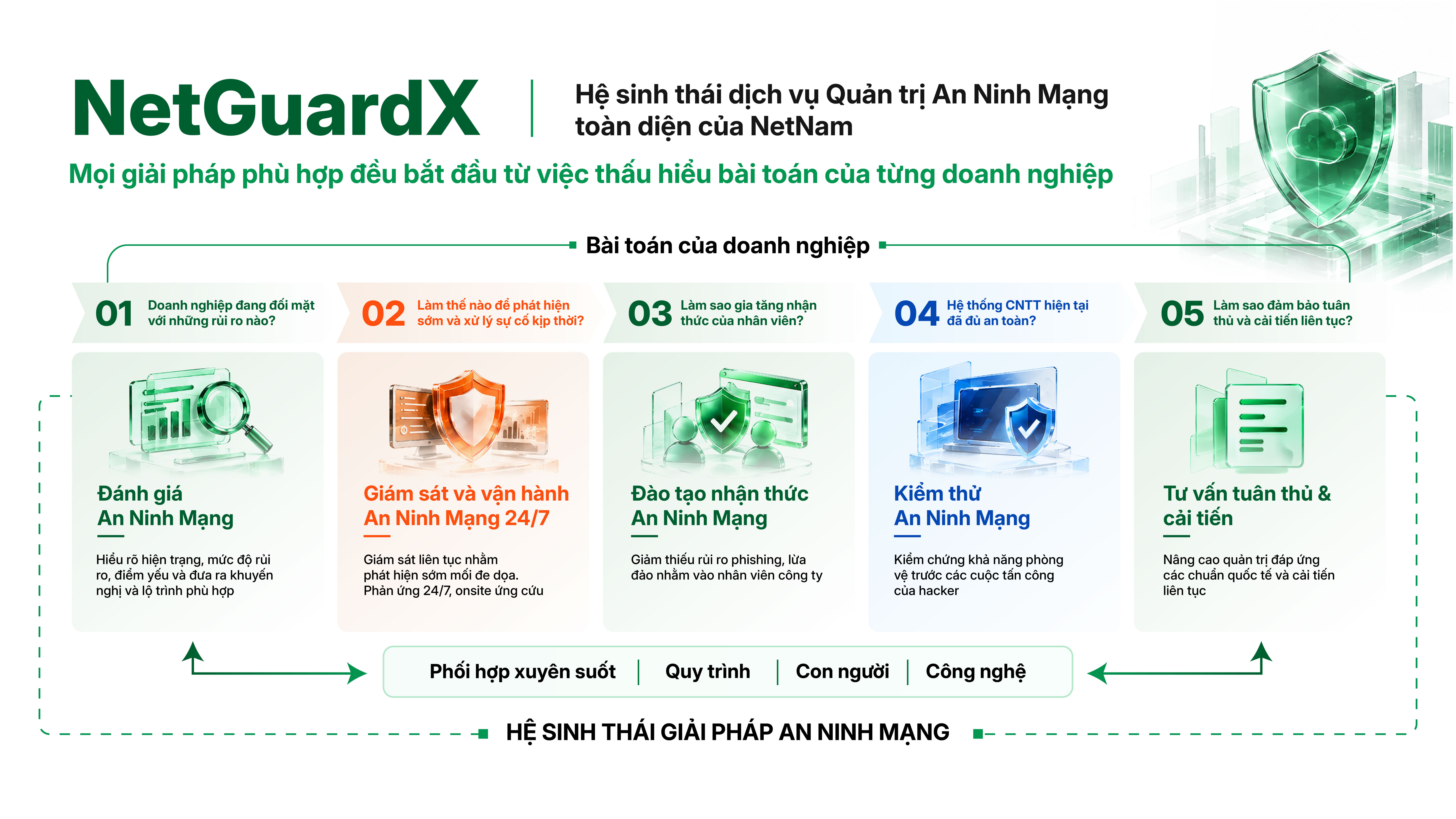
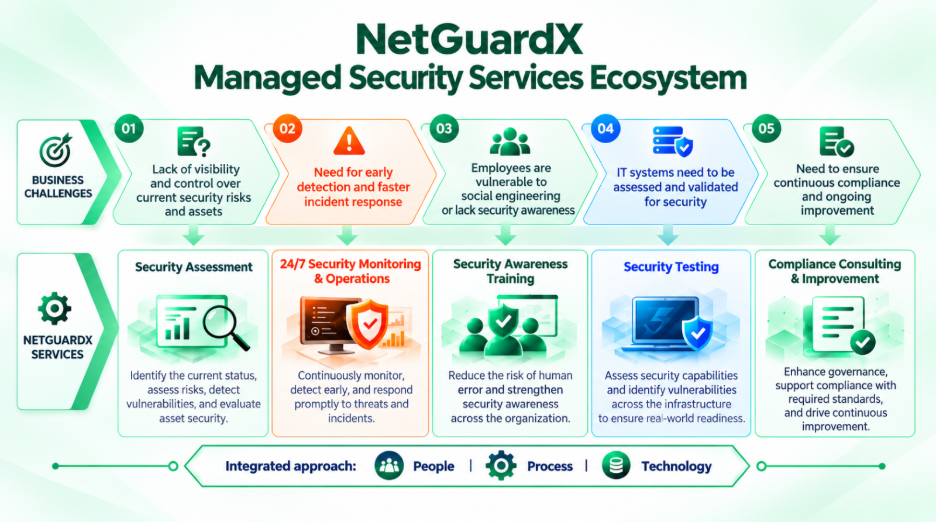
Final Advice: As a professional managed cloud partner for multinationals operating in Vietnam, NetNam not only provides full-stack Managed Infrastructure Services (MISP) but also accompanies businesses in assessing infrastructure maturity and consulting on the most suitable cloud strategy. NetNam's expert team helps businesses: "Think Big, Start Small, Scale Fast." You can start with Single-Cloud but design a standard architecture (Containers, IaC) to remain Multi-Cloud ready for the future.
As a professional managed cloud partner for multinationals operating in Vietnam, NetNam not only provides full-stack Managed Infrastructure Services (MISP) but also accompanies businesses in assessing infrastructure maturity and consulting on the most suitable cloud strategy. NetNam's expert team helps businesses:
- Monitor and operate systems 24/7.
- Optimize security with comprehensive MSSP services.
- Implement automation to minimize human error.
Contact NetNam today for a free preliminary infrastructure assessment report!
- Hotline: 1900 1586
- Email: support@netnam.vn
- Website: www.netnam.com
Submit your request






/Blog%20Post/ri_facebook-fill-white.svg)

